



Synastry and Natal Chart: How to Analyze Relationship Astrology
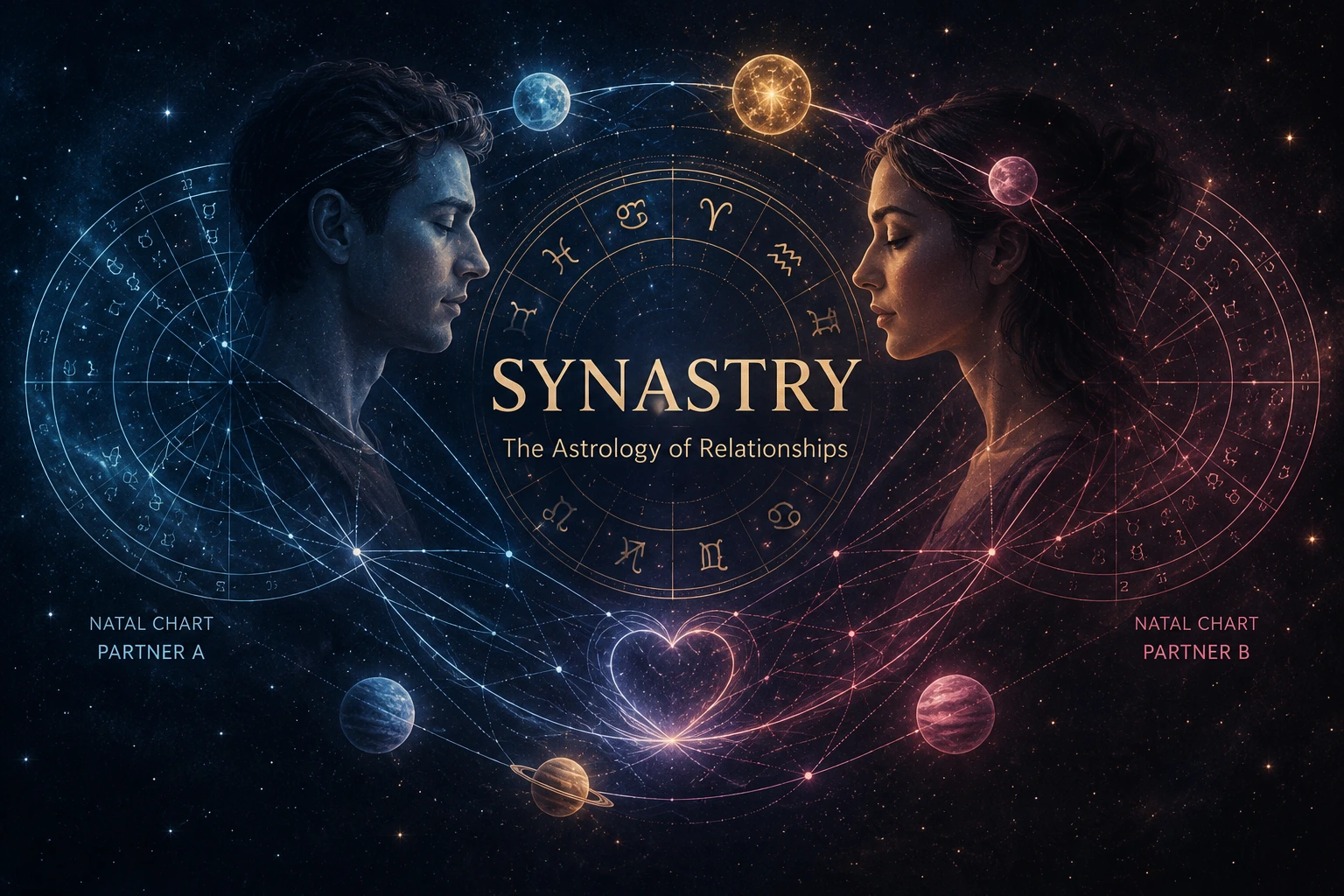
Synastry analysis begins with the natal charts of both individuals. Before interpreting the aspects between two charts, an astrologer must first understand each person's individual horoscope and how significant relationships are represented within it. From this perspective, relationships are not isolated experiences: they activate existing planetary patterns, personal needs, and possibilities already indicated in the natal chart.
This is why a sound understanding of synastry requires more than simply identifying favorable or challenging aspects between two people. The astrologer must first determine which planets represent the individuals involved and examine their condition, rulerships, and connections. These factors provide the foundation for understanding why a particular relationship develops and what role it may play in a person's life.
The Natal Chart as the Foundation of Relationships
In this approach, another person activates certain parts of our own horoscope. The planets involved describe how we experience that person and which emotional or psychological patterns become prominent through the relationship. Consequently, the same individual may be experienced differently by different people, depending on the planetary symbolism within each natal chart.
The condition of the relevant planets is therefore essential. Their signs, houses, aspects, and dispositors help explain the potential challenges and constructive possibilities associated with a relationship. Synastry cannot be interpreted accurately without considering this individual foundation first.
The Meaning of Synastry Aspects
Once the natal charts have been evaluated, the astrologer can examine how the planets interact between them. Personal-planet contacts are particularly relevant to initial attraction, communication, emotional responses, and everyday interactions. Contacts involving slower planets may become more apparent as the relationship develops and the individuals share more experiences.
Conjunctions receive particular attention in this method because they symbolize a direct meeting between planetary functions. Their meaning depends on the planets involved and their broader natal condition. A challenging aspect does not automatically prevent a relationship from forming, just as a harmonious aspect does not guarantee that the relationship will remain uncomplicated.
For a clearer understanding of how individual contacts contribute to compatibility and relationship dynamics, explore this guide to the most important synastry aspects.
The Moon, Venus, and Emotional Compatibility
The Moon and Venus are important when examining how two people experience one another emotionally. The Moon relates to familiarity, instinctive reactions, habits, and emotional closeness, while Venus describes attraction, affection, pleasure, and the ability to enjoy another person's company.
Aspects between these planets and the other person's personal planets can help explain why two people feel comfortable together, develop attraction, or experience difficulties understanding each other's needs. The exactness of an aspect and the wider chart context help determine its relative significance.
Interpreting the Relationship as a Whole
The purpose of synastry is to combine these different layers into a coherent interpretation. The natal charts describe each individual's relationship patterns, while the connections between the charts show how those patterns interact. By examining planetary symbolism, house placements, dispositors, and aspects together, the astrologer can develop a more complete picture of the relationship's strengths, tensions, and potential for emotional connection.
🔒 Continue Reading
Unlock the full lesson by joining the free astrology course.
Get Free Course AccessWant a Personal Astrology Reading?
Get a personal astrology consultation based on your own chart.
Get a Personal ReadingIf this lesson was helpful, you may support the work and help keep all content freely available.
Support the Work